

Melanocortin Pathways (MC1R / MC3R / MC4R)
Melanocortin pathways refer to a group of neuroendocrine and peripheral signaling systems mediated by melanocortin receptors, primarily MC1R, MC3R, and MC4R. In biological research, these pathways are studied for their roles in energy balance, appetite regulation, pigmentation signaling, and neurobehavioral regulation.
Melanocortin signaling is initiated by endogenous melanocortin peptides and involves receptor-specific signaling cascades that influence both central nervous system activity and peripheral physiological processes.
Research Context
In neuroendocrine and metabolic research, melanocortin pathways are examined to better understand:
- Central regulation of appetite and satiety
- Energy expenditure and metabolic balance
- Neurobehavioral signaling and motivation
- Peripheral tissue signaling related to pigmentation and inflammation
- Integration of hypothalamic signaling networks
Researchers study melanocortin pathways as part of broader investigations into how the brain coordinates metabolic and behavioral responses.
Key Melanocortin Receptors Studied
From a research perspective, the most commonly studied melanocortin receptors include:
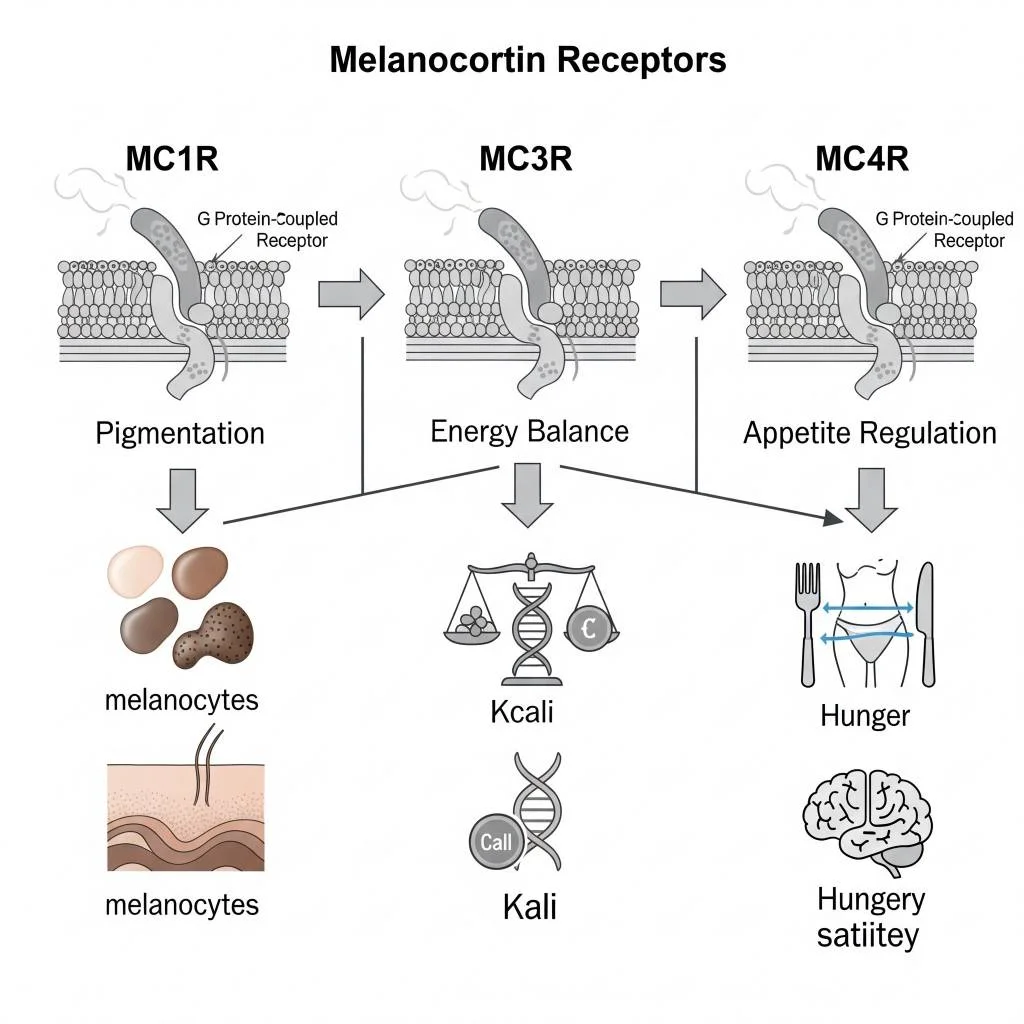
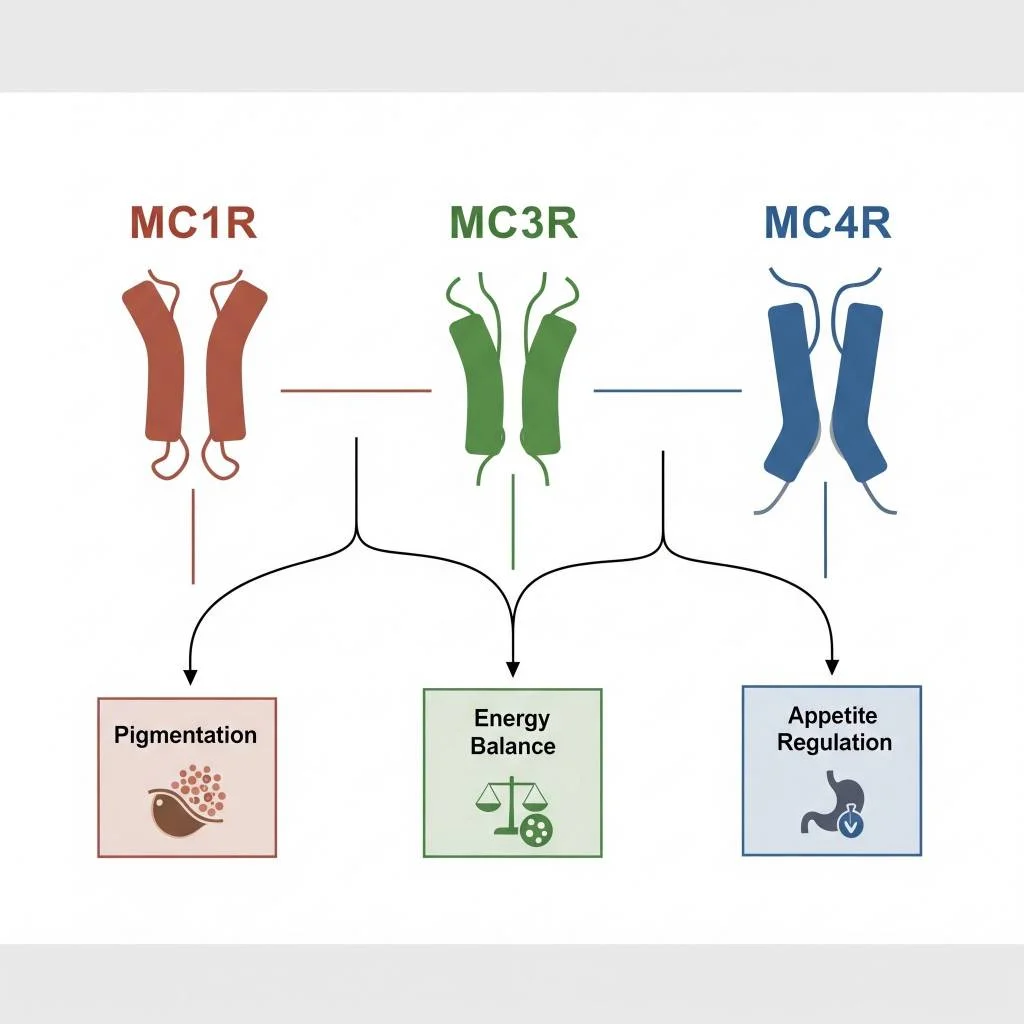
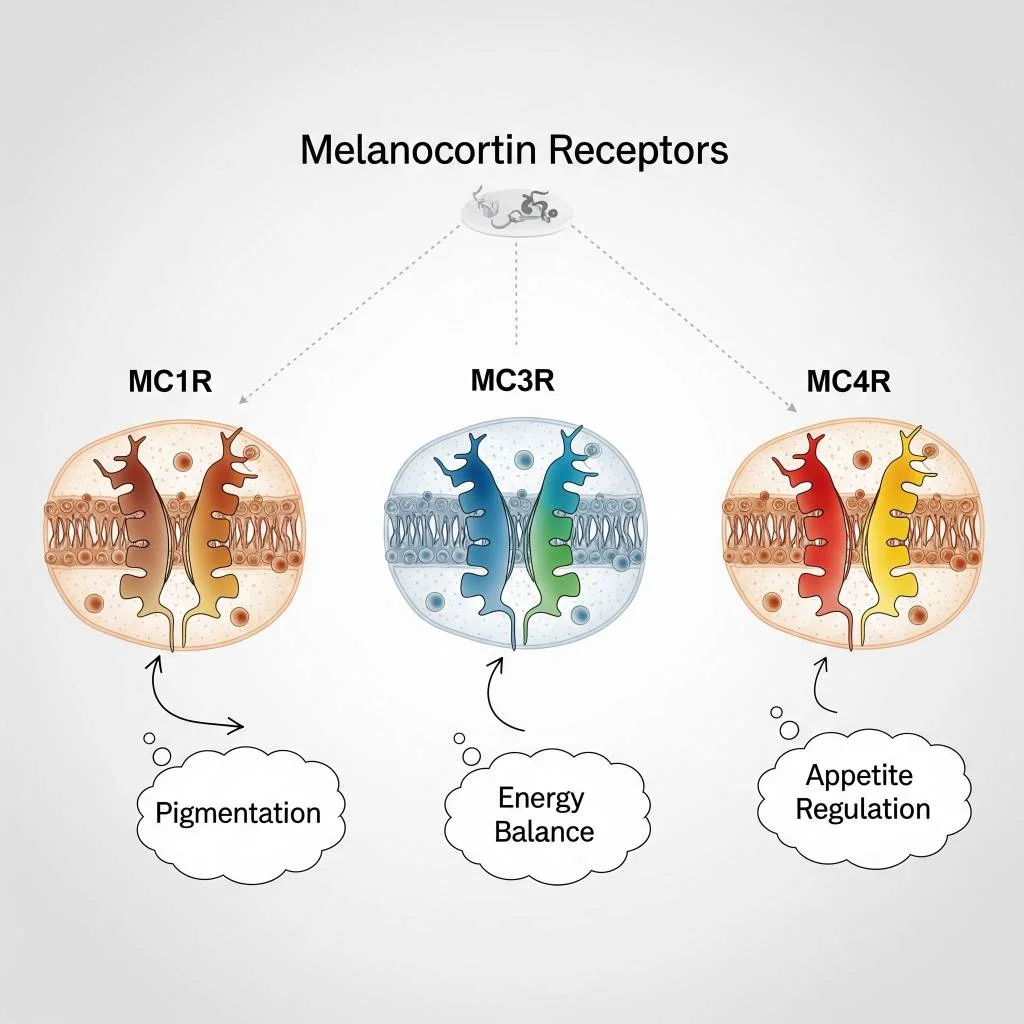
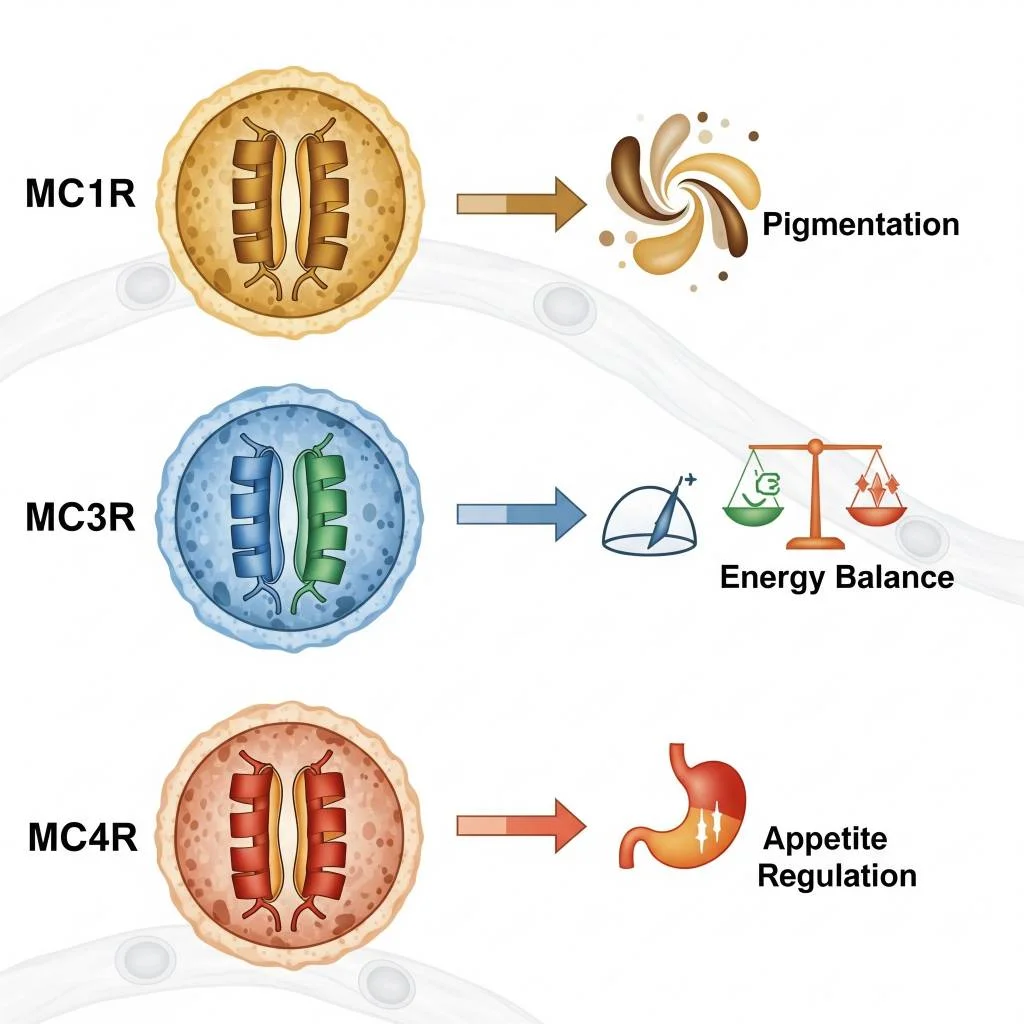
- MC1R – examined primarily in pigmentation and peripheral signaling research
- MC3R – studied in energy balance and metabolic signaling contexts
- MC4R – a major focus in appetite regulation and neuroendocrine signaling research
Each receptor subtype exhibits distinct tissue expression patterns and signaling roles, making melanocortin pathways highly complex and context-dependent.
Melanocortin Pathways and Appetite Regulation
Melanocortin signaling is a central component of appetite regulation signaling research. Scientific studies investigate how melanocortin receptors:
- Influence hunger and satiety perception
- Interact with hypothalamic appetite circuits
- Coordinate with incretin and ghrelin pathways
- Regulate energy intake and expenditure
MC4R, in particular, is frequently referenced in research examining central appetite control mechanisms.
Relevance to Peptide Research
Melanocortin pathways are highly relevant to peptide research because:
- Certain peptides are studied for their interaction with melanocortin receptors
- Melanocortin signaling illustrates how peptides influence neuroendocrine behavior
- These pathways bridge metabolism, behavior, and peripheral signaling
Understanding melanocortin pathways helps researchers interpret how neuroactive peptides are discussed in scientific literature and experimental models.
Related Research Compounds
Melanocortin pathway signaling is commonly referenced in research involving peptides such as:
- Melanotan II – studied for melanocortin receptor signaling
- PT-141 (Bremelanotide) – examined for MC receptor–mediated neuroendocrine signaling
- Cagrilintide – studied alongside appetite-related melanocortin pathways
Related Glossary Terms
- Appetite Regulation Signaling
- Neuroendocrine Signaling
- Melanocortin Receptors
- Incretin System
- Ghrelin
Educational Disclaimer
This definition is provided for educational and informational purposes only and reflects how melanocortin pathways are discussed in scientific and research contexts. It does not constitute medical, clinical, or therapeutic guidance.