

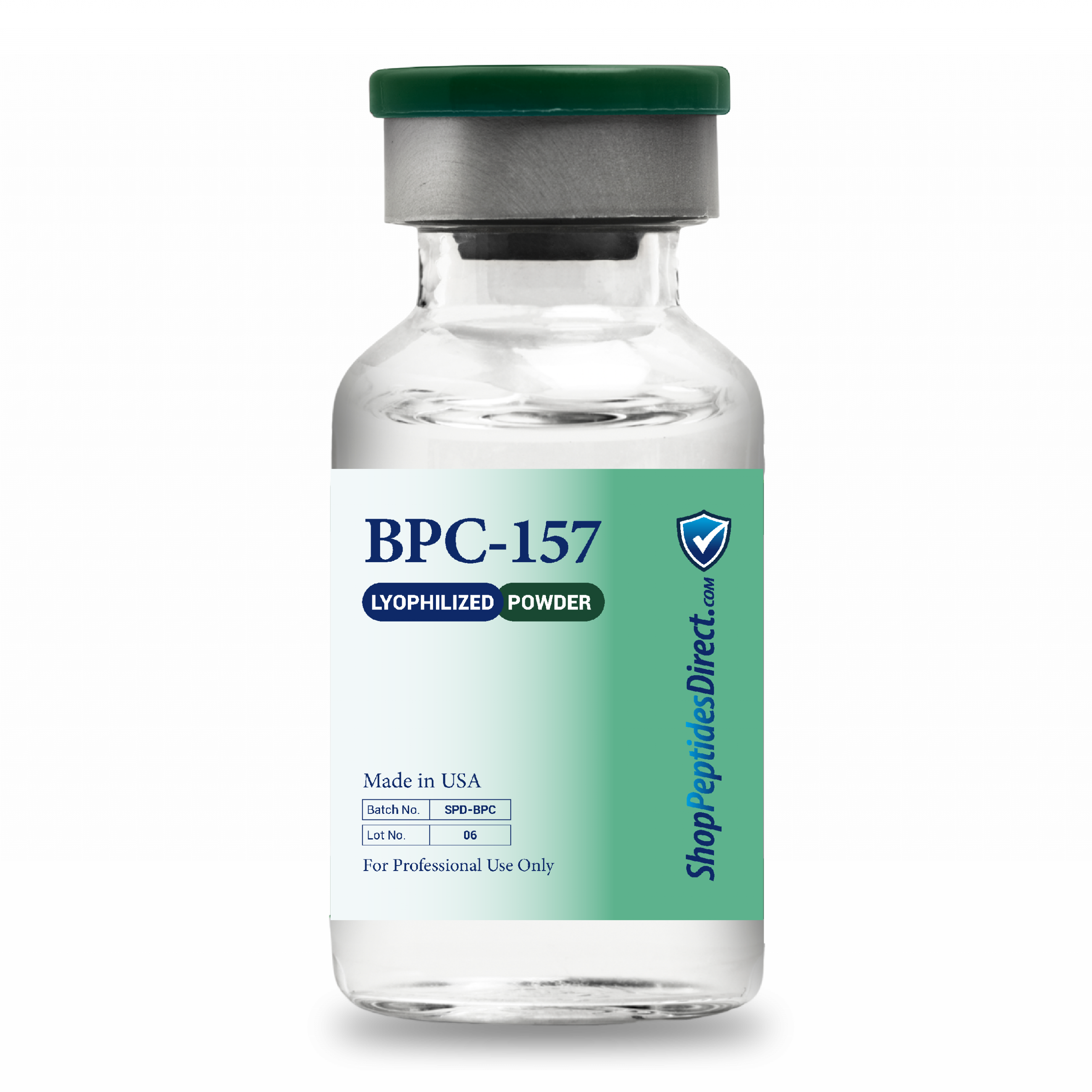
BPC-157
BPC-157 is a stable synthetic peptide derived from a gastric protective protein. It is renowned for its regenerative and cytoprotective properties across multiple tissues. It is widely studied for soft tissue healing, GI repair, neuroprotection, and injury recovery.
Price range: $24.99 through $45.99

-
 3rd Party CoA
-
Quality guaranteed
-
Shipped within 24 hours
-
99% Purified
BPC-157 (Body Protection Compound-157) is a synthetic peptide derived from a protective protein found in the human gastric system. Renowned for its regenerative and cytoprotective properties, BPC-157 has been widely studied in models of soft tissue healing, gastrointestinal repair, neuroprotection, and musculoskeletal injuries. Its unique stability and activity across multiple tissue types make it a highly versatile compound for experimental models in trauma recovery and inflammation.
– Form: Lyophilized peptide
– Purity: ≥99%
– Origin: Manufactured and tested in the USA
– Certifications: Certificate of Analysis (COA) included with every order
BPC-157 is believed to act by:
– Promoting angiogenesis and blood vessel formation
– Modulating inflammatory cytokines and oxidative stress
– Enhancing tendon, ligament, and muscle healing
– Stimulating fibroblast migration and collagen production
– Supporting gastrointestinal barrier integrity and repair
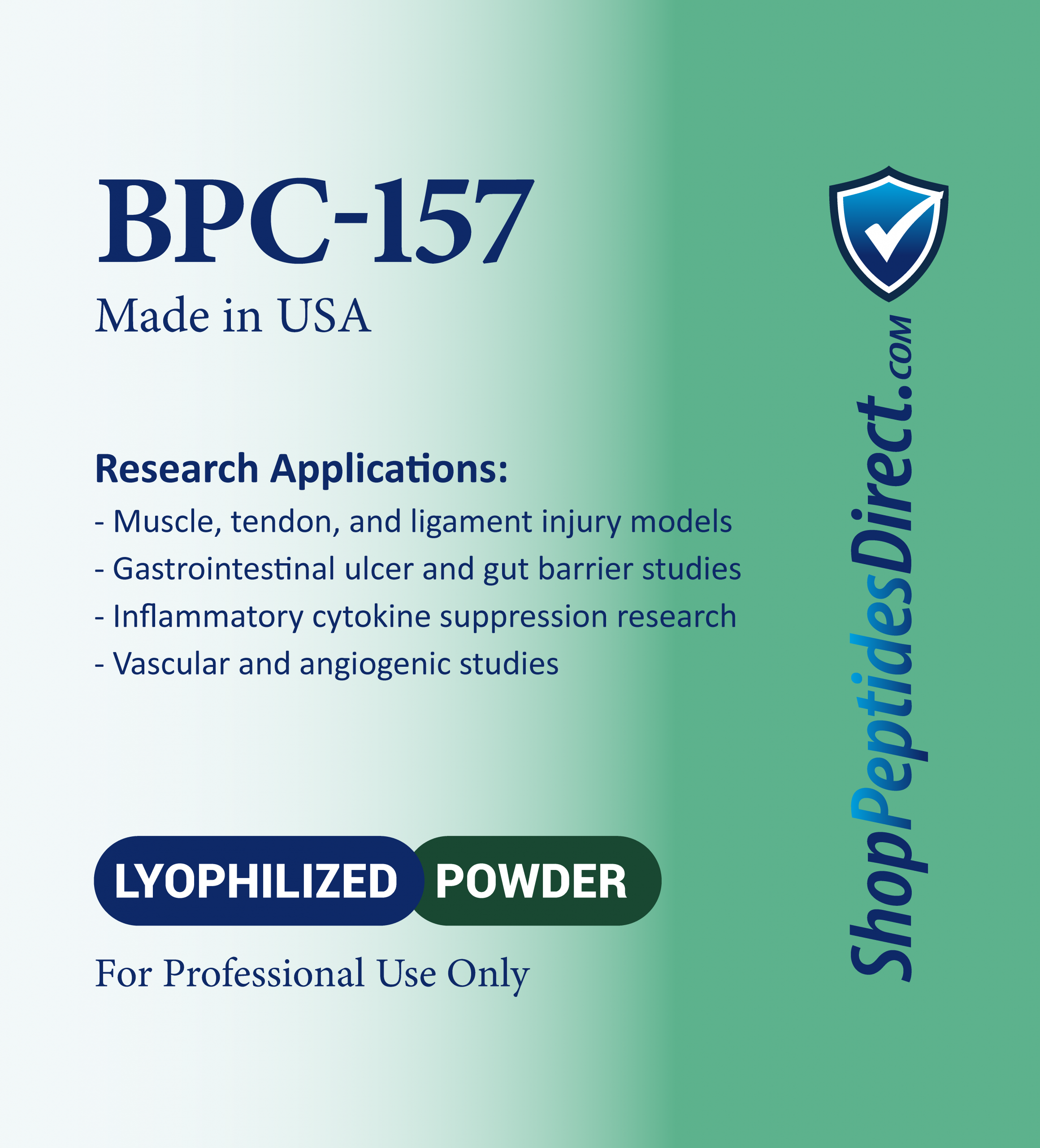
– Muscle, tendon, and ligament injury models
– Gastrointestinal ulcer and gut barrier studies
– Inflammatory cytokine suppression research
– Vascular and angiogenic studies
– Central nervous system healing and neuroregeneration
– Highly stable in gastric and systemic environments
– Supports accelerated tissue recovery in vivo
– Useful across multiple organ systems
– Low toxicity and high tolerability in preclinical models
Each vial is:
– Manufactured in a GMP-compliant U.S. facility
– Accompanied by a Certificate of Analysis (COA)
– Subjected to HPLC and mass spectrometry verification
– Shipped from within the United States for quality control
– Contents: 5mg, 10mg of lyophilized BPC-157 peptide
– Appearance: White/off-white powder
– Solubility: Sterile bacteriostatic water recommended
– Storage: Store lyophilized vial at -20°C; reconstituted solution stable up to 30 days when refrigerated
*For laboratory research use only. Not intended for human or veterinary use.*
BPC-157 (Body Protection Compound-157) is a synthetic peptide derived from a naturally occurring protein in gastric juice. It is widely researched for its regenerative properties, particularly in musculoskeletal healing, gastrointestinal protection, and anti-inflammatory effects.
BPC-157 appears to promote angiogenesis (new blood vessel formation), modulate nitric oxide production, and support fibroblast migration to injured tissue. These effects make it a promising peptide for studies focused on accelerated wound healing, tendon repair, and gut lining restoration.
Our BPC-157 is provided as a sterile, lyophilized powder in single-use vials. Each vial is manufactured in the USA under stringent lab controls to ensure purity, sterility, and consistency across batches.
Store lyophilized BPC-157 at -20°C, protected from light and moisture. After reconstitution, it should be refrigerated at 2–8°C and used within your lab’s recommended timeframe for best stability and effectiveness.
Each vial is ≥98% pure and validated by HPLC and Mass Spectrometry. A batch-specific Certificate of Analysis (COA) is included with every order, providing full transparency and lab-level quality assurance.
Yes. While the product is stable at room temperature during standard shipping, we offer cold-chain shipping options for sensitive projects or larger research labs that require strict handling procedures.
Yes. In research models, BPC-157 is often studied with TB-500 or growth factors to evaluate synergistic effects on injury recovery or inflammation. All use must follow approved lab research protocols.
Simply visit our Lab Test Results page, select BPC-157 from the dropdown, and enter your email. We’ll send you the COA for your specific batch within minutes.
Shop Peptides Direct guarantees ≥98% purity, U.S.-based lab testing, and fast shipping. Each vial includes a verified COA, and we stand behind our Price Match Guarantee—if you find the same quality for less, we’ll match it. Your research deserves the highest standard.
BPC-157 (5 mg & 10 mg Vial) Dosage Protocol
Quickstart Highlights
BPC-157 (Body Protection Compound-157) is a synthetic 15-amino-acid peptide derived from a gastric protein sequence studied for tissue-healing and cytoprotective properties[1][2]. Preclinical models demonstrate accelerated wound repair and anti-inflammatory activity[3], though human clinical data remain limited to early-phase safety trials and small case reports[4][5]. This educational protocol presents a once-daily subcutaneous approach using practical dilutions for clear insulin-syringe measurements.
10 mg Vial
- Reconstitute: Add 3.0 mL bacteriostatic water → 3.33 mg/mL concentration.
- Typical daily range: 200–600 mcg once daily (gradual titration).
- Easy measuring: At 3.33 mg/mL, 1 unit = 0.01 mL ≈ 33.3 mcg on a U-100 insulin syringe.
5 mg Vial
- Reconstitute: Add 3.0 mL bacteriostatic water → 1.67 mg/mL concentration.
- Typical daily range: 200–600 mcg once daily (gradual titration).
- Easy measuring: At 1.67 mg/mL, 1 unit = 0.01 mL ≈ 16.7 mcg on a U-100 insulin syringe.
Storage: Lyophilized: freeze at −20 °C (−4 °F); after reconstitution, refrigerate at 2–8 °C (35.6–46.4 °F); avoid freeze–thaw cycles.
Dosing & Reconstitution Guide
Educational guide for reconstitution and daily dosing
Standard / Gradual Approach
10 mg Vial (3 mL = ~3.33 mg/mL)
| Week | Daily Dose (mcg) | Units (per injection) (mL) |
|---|---|---|
| Weeks 1–2 | 200 mcg (0.2 mg) | 6 units (0.06 mL) |
| Weeks 3–4 | 400 mcg (0.4 mg) | 12 units (0.12 mL) |
| Weeks 5–8+ | 600 mcg (0.6 mg) | 18 units (0.18 mL) |
5 mg Vial (3 mL = ~1.67 mg/mL)
| Week | Daily Dose (mcg) | Units (per injection) (mL) |
|---|---|---|
| Weeks 1–2 | 200 mcg (0.2 mg) | 12 units (0.12 mL) |
| Weeks 3–4 | 400 mcg (0.4 mg) | 24 units (0.24 mL) |
| Weeks 5–8+ | 600 mcg (0.6 mg) | 36 units (0.36 mL) |
Frequency: Inject once daily subcutaneously. These schedules use the largest practical dilution (3.0 mL) to keep per-injection units well above 5 for better accuracy. Dosing is extrapolated from preclinical models[1][6]; human clinical validation remains limited.
Reconstitution Steps
- Draw 3.0 mL bacteriostatic water with a sterile syringe.
- Inject slowly down the vial wall; avoid foaming.
- Gently swirl/roll until dissolved (do not shake).
- Label and refrigerate at 2–8 °C (35.6–46.4 °F), protected from light.
Supplies Needed
Plan based on an 8–16 week daily protocol with gradual titration.
10 mg Vials (BPC-157, 10 mg each)
- 8 weeks ≈ 3 vials (25.2 mg used)
- 12 weeks ≈ 5 vials (42 mg used)
- 16 weeks ≈ 6 vials (58.8 mg used)
5 mg Vials (BPC-157, 5 mg each)
- 8 weeks ≈ 6 vials (25.2 mg used)
- 12 weeks ≈ 9 vials (42 mg used)
- 16 weeks ≈ 12 vials (58.8 mg used)
Insulin Syringes (U-100)
- Per week: 7 syringes (1/day)
- 8 weeks: 56 syringes
- 12 weeks: 84 syringes
- 16 weeks: 112 syringes
Bacteriostatic Water (10 mL bottles)
Use ~3.0 mL per vial for reconstitution.
- 10 mg protocol (8 weeks, 3 vials): 9 mL → 1 × 10 mL bottle
- 5 mg protocol (8 weeks, 6 vials): 18 mL → 2 × 10 mL bottles
- 10 mg protocol (12 weeks, 5 vials): 15 mL → 2 × 10 mL bottles
Alcohol Swabs
One for the vial stopper + one for the injection site each day.
- Per week: 14 swabs (2/day)
- 8 weeks: 112 swabs → recommend 2 × 100-count boxes
- 12 weeks: 168 swabs → recommend 2 × 100-count boxes
- 16 weeks: 224 swabs → recommend 3 × 100-count boxes
Protocol Overview
Concise summary of the once-daily regimen.
- Goal: Support tissue-healing and recovery processes based on preclinical evidence[1][3].
- Schedule: Daily subcutaneous injections for 8–12 weeks (extend to 16 weeks if desired).
- Dose Range: 200–600 mcg daily with gradual titration.
- Reconstitution: 3.0 mL per vial (1.67 mg/mL for 5mg, 3.33 mg/mL for 10mg) for accurate unit measurements.
- Storage: Lyophilized frozen; reconstituted refrigerated; avoid repeated freeze–thaw.
Dosing Protocol
Suggested daily titration approach.
- Start: 200 mcg daily; increase by ~200 mcg every 2 weeks as tolerated.
- Target: 400–600 mcg daily by Weeks 5–8+.
- Frequency: Once per day (subcutaneous).
- Cycle Length: 8–12 weeks; optional extension to 16 weeks.
- Timing: Any consistent time; rotate injection sites.
Storage Instructions
Proper storage preserves peptide quality.
- Lyophilized: Store at −20 °C (−4 °F) in dry, dark conditions; minimize moisture exposure.
- Reconstituted: Refrigerate at 2–8 °C (35.6–46.4 °F); prepare aliquots if needed and avoid freeze–thaw.
- Allow vials to reach room temperature before opening to reduce condensation uptake.
Important Notes
Practical considerations for consistency and safety.
- Use new sterile insulin syringes for each injection; dispose in a sharps container[7].
- Rotate injection sites (abdomen, thighs, upper arms) to reduce local irritation[8].
- Inject slowly; wait a few seconds before withdrawing the needle.
- Document daily dose and site rotation to maintain consistency.
- BPC-157 human data are preliminary; clinical decisions should involve qualified healthcare providers.
How This Works
BPC-157 is a synthetic peptide corresponding to a partial sequence of human gastric juice protein[2]. Preclinical studies suggest it modulates nitric oxide pathways and growth-factor expression to promote angiogenesis and collagen deposition in damaged tissues[1][3]. Animal models report accelerated healing of gut, tendon, ligament, and muscle injuries[6]. A Phase I oral safety trial has been completed[9], and a small human case series reported improvements following intra-articular administration[5]; however, large-scale controlled human efficacy data are not yet available.
Potential Benefits & Side Effects
Observations from preclinical and early clinical literature.
- Supports tissue repair in gut, tendon, muscle, and skin injury models (animal data)[1][3].
- Demonstrates anti-inflammatory and cytoprotective properties in preclinical settings[6].
- Phase I safety studies report good tolerability with no serious adverse events at tested doses[9].
- Occasional mild injection-site reactions (redness, itch) may occur with subcutaneous administration.
- Long-term human safety and efficacy remain under investigation[4].
Lifestyle Factors
Complementary strategies for best outcomes.
- Support recovery with adequate protein intake and micronutrient-rich foods.
- Balance activity and rest to allow tissue adaptation without overuse.
- Prioritize sleep and stress management to enhance natural healing processes.
- Consult qualified healthcare providers for injury-specific rehabilitation guidance.
Injection Technique
General subcutaneous guidance from clinical best-practice resources[10][11].
- Clean the vial stopper and skin with alcohol; allow to dry.
- Pinch a skinfold; insert the needle at 45–90° into subcutaneous tissue[10].
- Do not aspirate for subcutaneous injections; inject slowly and steadily[10].
- Rotate sites systematically (abdomen, thighs, upper arms) to avoid lipohypertrophy[8].
- Discard used syringes immediately in a sharps container per WHO guidelines[7].
Recommended Source
We recommend Shop Peptides Direct for high-purity BPC-157 (5 mg & 10 mg).
Why Shop Peptides Direct?
- High-purity, third-party-tested lots with batch COAs.
- Consistent, ISO-aligned handling and documentation.
- Reliable fulfillment to maintain cold-chain integrity.
Important Note
This content is for educational purposes only and is not medical advice, diagnosis, or treatment. BPC-157 remains investigational with limited human clinical data. For research use only. Not for human consumption.
References
-
Journal of Pharmacological Sciences — Klicek R et al. BPC-157 promotes colocutaneous fistula healing via NO-system modulation (rat model)
-
Pharmaceuticals (MDPI) — Józwiak M et al. Multifunctionality and possible medical application of BPC-157: literature and patent review (2025)
-
Current Pharmaceutical Design (PMC) — Sikiric P et al. BPC-157 stable gastric pentadecapeptide: novel therapy for wound healing and tissue repair
-
Life Sciences — Seiwerth S et al. BPC-157 and standard angiogenic growth factors: gastrointestinal tract healing and beyond
-
HSS Journal (PubMed) — Vasireddi N et al. Emerging use of BPC-157 in orthopaedic sports medicine: systematic review (2025)
-
Journal of Orthopaedic Research — Chang CH et al. BPC-157 promotes tendon-to-bone healing in a rat rotator cuff model
-
WHO (NCBI Bookshelf) — Guideline on safety-engineered syringes for IM, ID, and SC injections in health care settings (2016)
-
Johns Hopkins Arthritis Center — How to give a subcutaneous injection (patient education resource)
RELATED PRODUCTS
TB-500 (Thymosin Beta-4)
CJC-1295 DAC
Reviews
There are no reviews yet.