

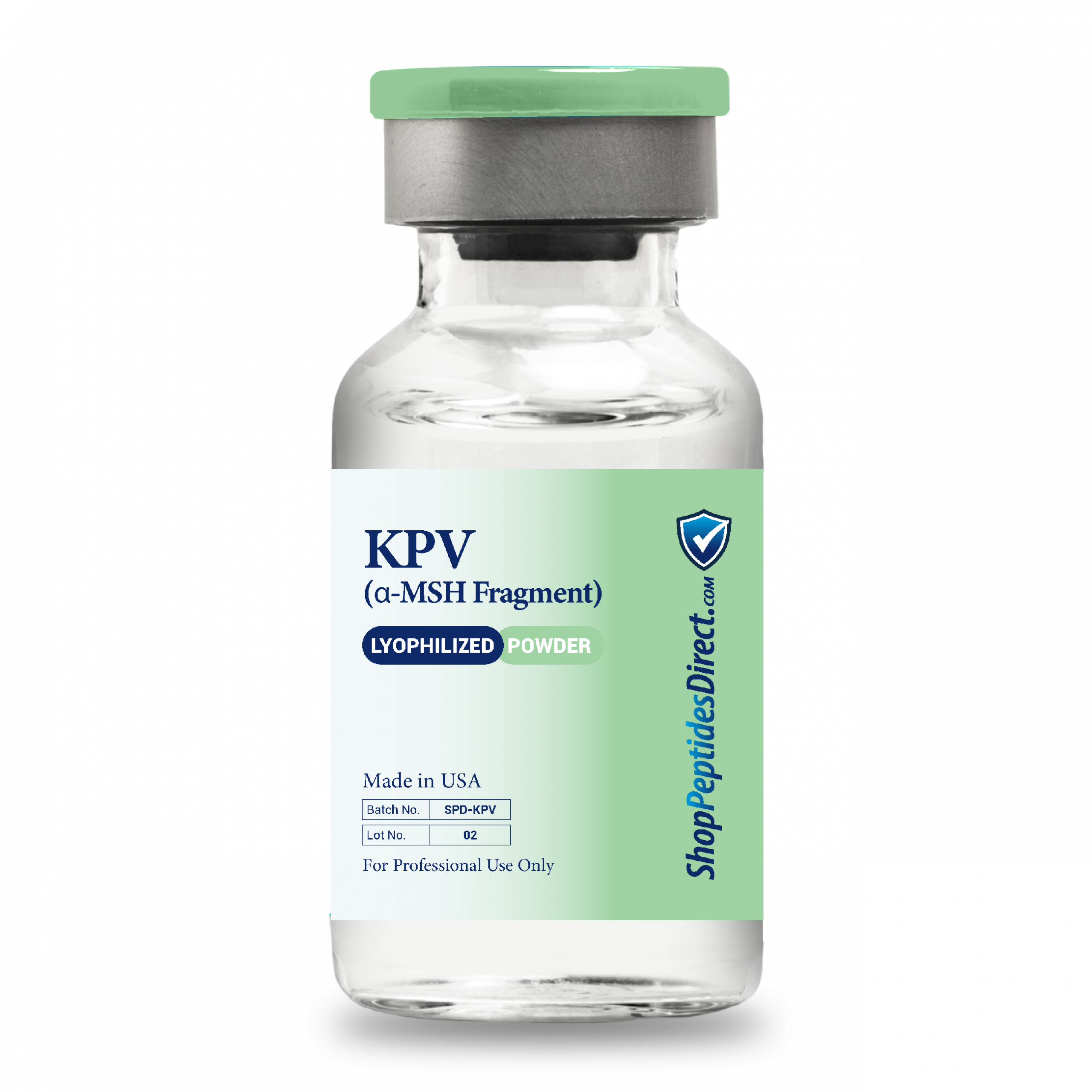

KPV (α-MSH fragment)
KPV is a synthetic tripeptide derived from $alpha$-MSH that is extensively studied for its potent anti-inflammatory and immunomodulatory effects without causing skin pigmentation, showing promise in research models for gastrointestinal, dermatological, and autoimmune diseases.
$43.99

-
 3rd Party CoA
-
Quality guaranteed
-
Shipped within 24 hours
-
99% Purified
KPV is a synthetic tripeptide fragment derived from the C-terminal sequence of alpha-melanocyte-stimulating hormone (α-MSH). It is extensively studied for its potent anti-inflammatory and immunomodulatory effects without the pigment-inducing properties of full-length α-MSH. KPV has shown promise in gastrointestinal, dermatological, and autoimmune disease models, offering researchers a unique tool for exploring cytokine regulation, epithelial repair, and mucosal immune response.
– Form: Lyophilized peptide
– Purity: ≥99%
– Origin: Manufactured and tested in the USA
– Certifications: Certificate of Analysis (COA) included with every order
KPV exerts anti-inflammatory effects by:
– Inhibiting pro-inflammatory cytokines (e.g., TNF-α, IL-6, IL-1β)
– Blocking NF-κB signaling pathway
– Supporting epithelial barrier integrity and wound repair
– Modulating immune cell infiltration and oxidative stress
– Interacting with melanocortin receptors, especially MC1R
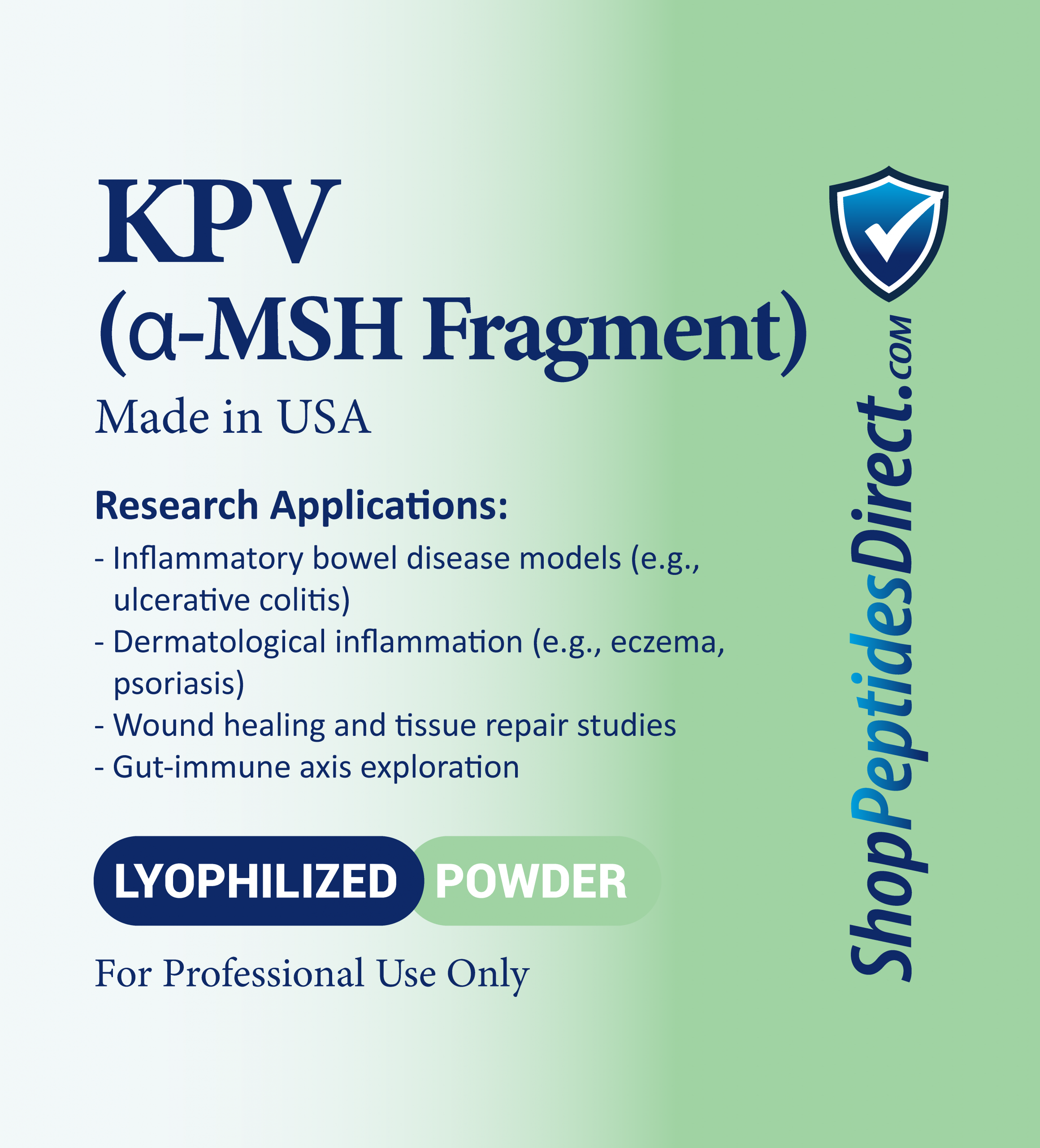
– Inflammatory bowel disease models (e.g., ulcerative colitis)
– Dermatological inflammation (e.g., eczema, psoriasis)
– Wound healing and tissue repair studies
– Gut-immune axis exploration
– Cytokine and oxidative stress modulation
– Non-pigmenting anti-inflammatory peptide
– High selectivity for pro-inflammatory signaling pathways
– Safe and well-tolerated in preclinical models
– Precise modulation of cytokine cascades
Each vial is:
– Manufactured in a GMP-compliant U.S. facility
– Accompanied by a Certificate of Analysis (COA)
– Subjected to HPLC and mass spectrometry verification
– Shipped from within the United States for quality control
– Contents: 5mg, 10, 50 of lyophilized KPV peptide
– Appearance: White/off-white powder
– Solubility: Sterile bacteriostatic water or acetic acid recommended
– Storage: Store lyophilized vial at -20°C; reconstituted solution stable up to 30 days when refrigerated
*For laboratory research use only. Not intended for human or veterinary use.*
KPV is a synthetic tripeptide fragment (Lys-Pro-Val) derived from the larger α-MSH (alpha-melanocyte-stimulating hormone) peptide. It is widely researched for its potent anti-inflammatory and immunomodulatory effects, particularly in skin, gut, and autoimmune-related models.
KPV is believed to exert its effects by downregulating pro-inflammatory cytokines such as TNF-α, IL-6, and IFN-γ. It also inhibits NF-κB activation, which plays a key role in chronic inflammation. Researchers study it for its ability to support immune balance and reduce tissue inflammation in preclinical models.
Our KPV is supplied as a sterile, lyophilized powder in single-use vials. Synthesized and tested in the USA, each batch is prepared under strict lab protocols to ensure high purity, safety, and consistency.
Store lyophilized KPV at -20°C in a cool, dry, and light-protected environment. Once reconstituted, keep refrigerated at 2–8°C and use within the timeline recommended by your laboratory protocol.
Shop Peptides Direct’ KPV is ≥98% pure, verified through HPLC and Mass Spectrometry. Every order includes a batch-specific Certificate of Analysis (COA) to confirm identity and quality.
Yes. While our packaging maintains stability during standard shipping, we also offer cold-chain shipping upon request for temperature-sensitive research projects.
Yes. In research settings, KPV is sometimes used in conjunction with gut or skin-healing peptides to evaluate synergistic effects on inflammation. All combinatory use must follow appropriate lab protocols.
Visit our Lab Test Results page, select ‘KPV’ from the dropdown, and enter your email address. We’ll send you the full batch-specific COA within minutes.
We provide U.S.-manufactured KPV with ≥98% purity, lab-verified documentation, and fast, reliable shipping. Every order is backed by our Price Match Guarantee—if you find equal quality for less, we’ll match it. Trust Legion Peptides for consistent results and professional-grade materials.
KPV (10 mg Vial) Dosage Protocol
Quickstart Highlights
KPV (Lysine–Proline–Valine) is a C‑terminal tripeptide fragment of α‑melanocyte‑stimulating hormone (α‑MSH) studied for its potent anti‑inflammatory properties without melanotropic side effects[1][2]. Research demonstrates KPV reduces pro‑inflammatory cytokines in models of inflammatory bowel disease and systemic inflammation[3]. This educational protocol presents a once‑daily subcutaneous approach using a practical dilution for precise insulin‑syringe measurements.
- Reconstitute: Add 3.0 mL bacteriostatic water → ~3.33 mg/mL concentration.
- Typical daily range: 200–500 mcg once daily (gradual titration recommended).
- Easy measuring: At 3.33 mg/mL, 1 unit = 0.01 mL ≈ 33.33 mcg on a U‑100 insulin syringe.
- Storage: Lyophilized: freeze at −20 °C (−4 °F) or below; after reconstitution, refrigerate at 2–8 °C (35.6–46.4 °F) and use within 30 days; avoid freeze–thaw cycles.
Dosing & Reconstitution Guide
Educational guide for reconstitution and daily dosing
Standard / Gradual Approach (3 mL = ~3.33 mg/mL)
| Week | Daily Dose (mcg) | Units (per injection) (mL) |
|---|---|---|
| Week 1 | 200 mcg | 6 units (0.06 mL) |
| Week 2 | 300 mcg | 9 units (0.09 mL) |
| Week 3 | 400 mcg | 12 units (0.12 mL) |
| Weeks 4–8 | 500 mcg | 15 units (0.15 mL) |
Frequency: Inject once daily subcutaneously. This schedule uses the largest practical dilution (3.0 mL) to maintain manageable injection volumes. For ≤10‑unit (≤0.10 mL) administrations, consider 30‑ or 50‑unit insulin syringes for improved readability and more precise measurement[10].
Reconstitution Steps
- Draw 3.0 mL bacteriostatic water with a sterile syringe.
- Inject slowly down the vial wall; avoid foaming.
- Gently swirl/roll until dissolved (do not shake).
- Label and refrigerate at 2–8 °C (35.6–46.4 °F), protected from light.
Supplies Needed
Plan based on an 8–16 week daily protocol with gradual titration.
- Peptide Vials (KPV, 10 mg each):
- 8 weeks ≈ 3 vials
- 12 weeks ≈ 4 vials
- 16 weeks ≈ 6 vials
- Insulin Syringes (U‑100):
- Per week: 7 syringes (1/day)
- 8 weeks: 56 syringes
- 12 weeks: 84 syringes
- 16 weeks: 112 syringes
- Bacteriostatic Water (10 mL bottles): Use ~3.0 mL per vial for reconstitution.
- 8 weeks (3 vials): 9 mL → 1 × 10 mL bottle
- 12 weeks (4 vials): 12 mL → 2 × 10 mL bottles
- 16 weeks (6 vials): 18 mL → 2 × 10 mL bottles
- Alcohol Swabs: One for the vial stopper + one for the injection site each day.
- Per week: 14 swabs (2/day)
- 8 weeks: 112 swabs → recommend 2 × 100‑count boxes
- 12 weeks: 168 swabs → recommend 2 × 100‑count boxes
- 16 weeks: 224 swabs → recommend 3 × 100‑count boxes
Protocol Overview
Concise summary of the once‑daily regimen.
- Goal: Support reduction of systemic inflammation and modulate immune responses without melanotropic effects[1][3].
- Schedule: Daily subcutaneous injections for 8–12 weeks (extend to 16 weeks if desired).
- Dose Range: 200–500 mcg daily with gradual weekly titration.
- Reconstitution: 3.0 mL per 10 mg vial (~3.33 mg/mL) for accurate unit measurements.
- Storage: Lyophilized frozen at −20 °C (−4 °F) or below; reconstituted refrigerated at 2–8 °C (35.6–46.4 °F); avoid repeated freeze–thaw.
Dosing Protocol
Suggested daily titration approach.
- Start: 200 mcg daily; increase by ~100 mcg weekly as tolerated[4][5].
- Target: 400–500 mcg daily by Weeks 4–8 for maintenance anti‑inflammatory effects.
- Frequency: Once per day (subcutaneous).
- Cycle Length: 8–12 weeks; optional extension to 16 weeks under monitoring.
- Timing: Any consistent time; rotate injection sites systematically.
Storage Instructions
Proper storage preserves peptide quality and stability.
- Lyophilized: Store at −20 °C (−4 °F) or below in dry, dark conditions; protect from moisture and light[6][7].
- Reconstituted: Refrigerate at 2–8 °C (35.6–46.4 °F); use within approximately 30 days[7].
- Allow vials to reach room temperature before opening to minimize condensation uptake.
- Avoid freeze–thaw cycles: Do not refreeze reconstituted peptide solutions; prepare aliquots if long‑term storage is needed[6].
Important Notes
Practical considerations for consistency and safety.
- Use new sterile insulin syringes for each administration; dispose in a sharps container immediately after use.
- Rotate injection sites systematically (abdomen, thighs, upper arms) at least 1–2 inches apart to reduce local irritation and prevent lipohypertrophy[8].
- Inject slowly; wait a few seconds before withdrawing the needle to prevent solution backflow.
- Document daily dose, injection site, and any observations to maintain consistency and track tolerability.
- If injection‑site reactions (redness, mild swelling) occur, apply a cool compress and monitor; persistent reactions warrant protocol review.
How This Works
KPV is the C‑terminal tripeptide sequence (residues 11–13) of α‑melanocyte‑stimulating hormone (α‑MSH), retaining potent anti‑inflammatory activity without the hormone's melanotropic effects[1][2]. Preclinical studies demonstrate KPV reduces pro‑inflammatory cytokines (TNF‑α, IL‑6, IL‑1β) and modulates immune cell activity in models of inflammatory bowel disease, colitis, and systemic inflammation[3]. The peptide's mechanism involves inhibition of nuclear factor kappa B (NF‑κB) signaling and modulation of inflammatory mediator release[2]. Subcutaneous administration provides systemic delivery with rapid absorption and sustained anti‑inflammatory effects observed in daily dosing protocols[4].
Potential Benefits & Side Effects
Observations from preclinical and early‑stage research.
- Anti‑inflammatory activity: Reduces pro‑inflammatory cytokines and modulates immune responses in models of inflammatory bowel disease and systemic inflammation[3].
- Oral and subcutaneous efficacy: Multiple routes of administration show activity, with subcutaneous injection favored for systemic delivery and consistent bioavailability[4].
- Wound healing support: Preclinical data suggest KPV may support tissue repair and wound healing processes through inflammatory modulation[5].
- Generally well tolerated: Occasional mild injection‑site reactions (redness, slight swelling) may occur; systemic side effects are rarely reported in research protocols.
- No melanotropic effects: Unlike full α‑MSH, KPV does not affect melanocyte activity or skin pigmentation[1].
Lifestyle Factors
Complementary strategies for optimizing inflammatory balance.
- Anti‑inflammatory diet: Emphasize whole foods, omega‑3 fatty acids, polyphenols, and minimize processed foods and refined sugars.
- Stress management: Chronic stress elevates inflammatory markers; incorporate stress‑reduction practices (meditation, yoga, adequate sleep).
- Physical activity: Regular moderate exercise supports healthy inflammatory balance; avoid overtraining which can increase inflammation.
- Sleep optimization: Prioritize 7–9 hours of quality sleep nightly to support immune regulation and inflammatory homeostasis.
- Gut health: Support microbiome diversity through probiotic‑rich foods and adequate fiber intake, particularly relevant for inflammatory bowel conditions.
Injection Technique
General subcutaneous guidance from clinical best‑practice resources[8][9].
- Clean the vial stopper and injection site with alcohol swabs; allow to dry completely (10–15 seconds).
- Pinch a 1–2 inch skinfold; insert the needle at 45–90° angle into subcutaneous tissue[8].
- Do not aspirate for subcutaneous injections; inject slowly and steadily over 3–5 seconds.
- Withdraw the needle smoothly and apply gentle pressure with a clean alcohol swab (do not rub the site).
- Rotate sites systematically using a pattern (e.g., alternating between right/left abdomen, right/left thigh) to avoid lipohypertrophy and maintain consistent absorption[9].
- Preferred sites: abdomen (at least 2 inches from navel), anterior/lateral thigh, or outer upper arm (if administering to self, abdomen and thigh are easiest).
Recommended Source
We recommend Shop Peptides Direct for high‑purity KPV (10 mg).
Why Shop Peptides Direct?
- High‑purity peptides with third‑party testing and batch‑specific certificates of analysis (COAs).
- Consistent quality control and ISO‑aligned handling procedures.
- Reliable fulfillment with proper cold‑chain packaging to maintain peptide integrity during shipping.
- Transparent batch documentation and customer support for research applications.
Important Note
This content is intended for therapeutic educational purposes only and does not constitute medical advice, diagnosis, or treatment. KPV is a research peptide not approved by regulatory agencies for human therapeutic use. Consult qualified healthcare professionals before beginning any peptide protocol. This information is provided for educational and research reference purposes only.
References
-
Journal of Pharmaceutical Drug Delivery Research (2022) — Pawar K. et al.: KPV as an α‑MSH fragment retains potent anti‑inflammatory activity without melanotropic side effects
-
FASEB Journal (2003) — Brzoska T. et al.: α‑MSH and related tripeptides: modulation of colitis, inflammation, and melanocortin receptors
-
Gastroenterology (2008) — Dalmasso G. et al.: PepT1‑mediated tripeptide KPV uptake reduces intestinal inflammation in DSS colitis models
-
Innerbody Research (2025) — KPV peptide benefits, safety, and administration routes; subcutaneous injection for systemic therapy
-
Peptides.org Dosage Guide (2023) — KPV dosage calculator and protocol: 200–400 mcg subcutaneously once daily for inflammation and wound healing
-
Bachem (Peptide Handling Guidelines) — Long‑term peptide stability best achieved in lyophilized form at <−15 °C; avoid extended storage in solution
-
PeptideSciences (Storage Guidelines) — Lyophilized peptides stable for short‑term at 4 °C, long‑term at −20 °C; reconstituted solutions refrigerated up to ~30 days
-
Johns Hopkins Arthritis Center — Subcutaneous injection technique: site preparation, needle angle (45–90°), and injection site rotation
-
NCBI Bookshelf (Clinical Procedures) — Best practices for injection: aseptic technique, site preparation, and administration procedures
-
PeptideDosages.com (KPV 10mg Protocol) — Reconstitution in 3 mL yields 3.33 mg/mL; unit/mL conversions; precision syringe recommendations for low volumes
RELATED PRODUCTS
Semaglutide

Retatrutide
 View Certificate

Cagrilintide
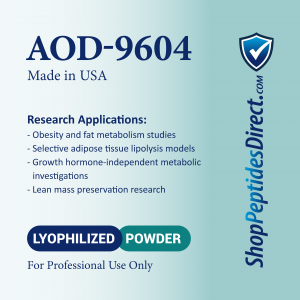
AOD-9604
View Certificate

Thymosin Alpha-1
View Certificate
Reviews
There are no reviews yet.